Tile roofs at altitude, and moorland lakes above the tree line
Ask the office to reserve a six night highland stay in Cuenca and Cajas
From $1,620 per person, two sharing a double room, for six nights. This is the opening segment of the southern Ecuadorean sierra, the line that runs from Cuenca to Podocarpus, and it stands on its own if you want only the highland half. June to September is the driest stretch up on the moorland; the city itself is much the same year round, cold after dark in any month.
Reserve this with the officeNothing is charged here. The form stays open at any hour and a person writes back inside one working day.
What sits at this altitude
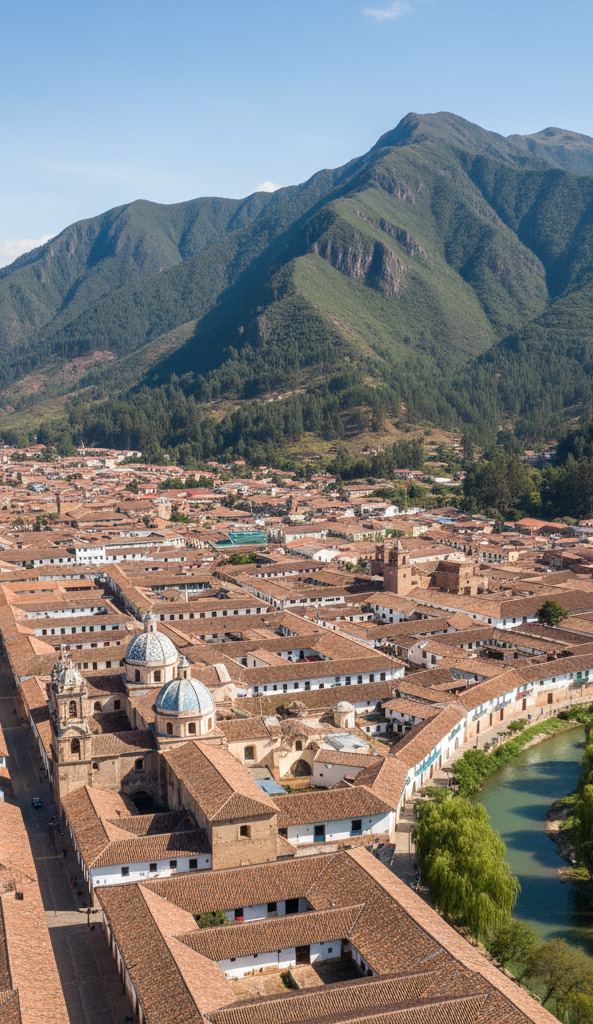
Cuenca is a grid of low plastered houses and red tile roofs laid out on a terrace above four small rivers, at about two thousand five hundred and fifty metres. Very little of it is taller than three storeys, so the ridges are visible from most streets. Above the city to the west the ground rises another thousand metres into Cajas: not forest and not bare rock, but paramo, a wet spongy moorland of tussock grass and small hard leaved trees, holding somewhere over two hundred lakes in glacial hollows. The two places are one water system. What falls on the moor is what runs through the city, and the road between them climbs from one to the other in under an hour.
A day below, a day above
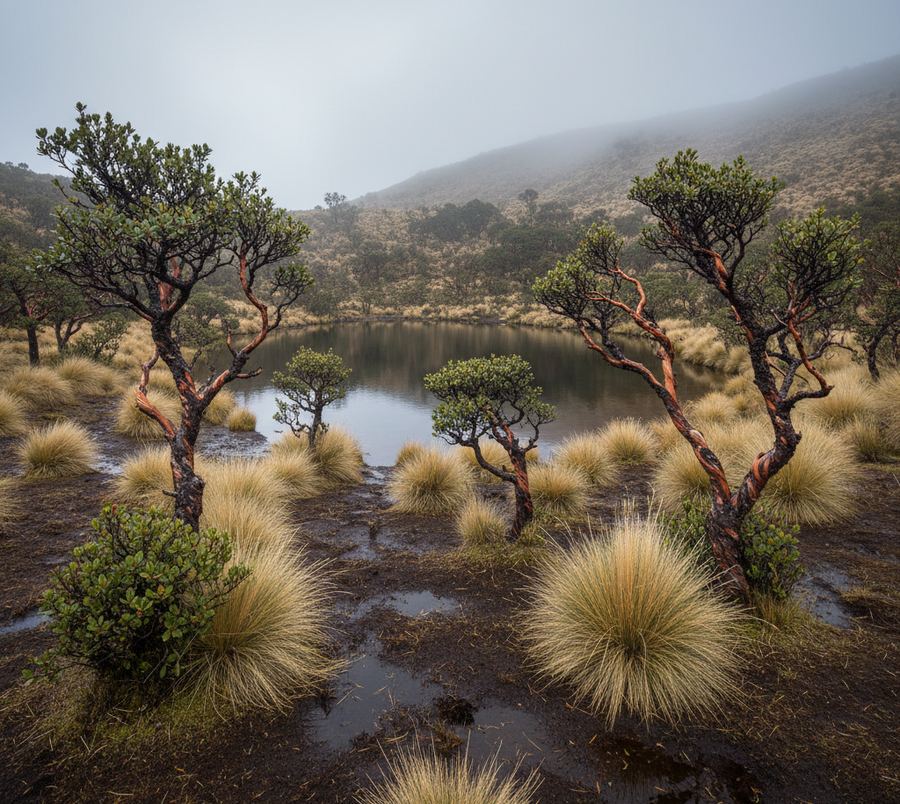
Three of the six days are city days and they are slow ones: the flower market under the old cathedral wall, a courtyard collection of hats woven from toquilla straw, the riverbank path, a good deal of sitting down. Two days go up to the moor with a guide, one an easy circuit around two or three of the lower lakes, one longer and steeper. Altitude decides the pace more than fitness does; people arriving from sea level are usually short of breath for the first two days and normal by the fourth. The sixth day is unallocated on purpose, because the weather up top does what it wants and it is better to hold a spare day than to force a walk into the wrong one.
Half a day of moving
The move into this segment carries a mark of 2, which means about half a day. Whichever coastal or northern city you fly into is your own booking; from there the operator takes you overland, and the road up through the western range takes between four and six hours depending on rain and roadworks. It is a real climb rather than a transfer, and the last hour of it is above three thousand metres, so most people feel it that evening. The office arranges no flights and no sea crossings anywhere, and holds no contract with any carrier; it reserves the vehicle, the driver and the room at the far end. Nothing else moves during the segment: you sleep in one place for all six nights.
Where the money goes, and where it stops
From $1,620 per person, two sharing a double room, in US dollars, which is also the money used in the country. Inside the figure: six nights in a small hotel in the old streets, breakfast every day, the overland leg described above, two guided days in Cajas with the park entry and the vehicle, and the city walk on the first morning. Outside it: yyyour own flights, lunches and dinners apart from one taken on the moor, drinks, laundry, tips, and a single room, which is quoted separately. The operator invoices you itself and sets its own deposit and cancellation terms; you will have them in writing before anything is agreed. Money never passes through this end, holds no card details, and is paid its commission by the operator after you travel.
| Nights | 6 |
|---|---|
| From | $1,620 per person, two sharing |
| Move into it | half a day |
| Part of | Southern Ecuadorean sierra |
| Taken alone | Yes. Nothing obliges you to take the rest of the line. |
| Inside the figure | Rooms, the ground arrangements named on this page, and the local operating company's own charges. |
| Outside the figure | Getting to the country, meals not named above, anything personal, and anything you add later. |
Asked before people commit
Will I actually see the lakes, or will it be in cloud?
Often cloud. The moor makes its own weather and it can close in within twenty minutes at any time of year, June to September included. Nobody controls that and the office will not pretend otherwise. On a poor day you still walk, at close range, through peat, tussock and stands of stunted trees, and you see perhaps one lake instead of six. Two moor days are scheduled partly for that reason.
Do I need to be fit for the altitude?
Fitness helps less than time does. The walking is a few hours on rough wet ground with modest climbs, and the real difficulty is thin air at three thousand eight hundred metres. The itinerary puts two city nights before the first moor day for that reason. The office cannot advise you medically and will not try: if you have a heart or lung condition, or you are pregnant, ask a doctor before you commit.
What if I want only this half of the line?
Then reserve only this half. The segment is a product in its own right, at $1,620 per person for six nights, and the second half is a separate one at $1,710 for five. Together they are the line at $3,330 for eleven nights, which is exactly the two figures added. Nothing changes in either direction, and the office does not tell you which shape to take.
Segment 1 of 2 on Southern Ecuadorean sierra
You can take this segment on its own and leave the rest of the line alone. Nothing here obliges you to walk the whole thing, and the figure for one piece is the figure for one piece.
Reserve one segment, or a whole line
This form is open at any hour, and whatever reaches it is read by a person who answers inside one working day. Nothing you send commits you, and no figure is charged at this end at any point.